Cape Town's Central Business District sits at the intersection of corporate South Africa and one of the world's most visited cities. For business travelers arriving at Cape Town International Airport, the CBD puts government offices, the Cape Town International Convention Centre (CTICC), and major financial institutions within a short radius - while V&A Waterfront and Table Mountain remain accessible after hours. This guide covers the key business hotel in the Cape Town CBD, how to position your stay strategically, and what the area actually delivers on the ground.
What It's Like Staying in Cape Town CBD
The Cape Town CBD operates on a distinct urban rhythm: weekday mornings around Long Street, Bree Street, and St George's Mall are busy with commuters and delivery traffic by 8 AM, while the area quietens considerably after 6 PM in most blocks away from the restaurant strips. Walking distances are genuinely short - the CTICC, Company's Garden, and the main MyCiTi bus interchange at Civic Centre are all reachable on foot in under 15 minutes from most central addresses. Nighttime pedestrian activity is limited in parts of the CBD, and the City Centre Improvement District (CCID) security patrols are a visible presence, though solo after-dark walking requires situational awareness.
Business travelers benefit most from this location - proximity to government offices, major law firms, and the CTICC is unmatched anywhere else in the city. Leisure travelers who prioritize beaches or the V&A Waterfront may find the CBD less convenient than staying in De Waterkant or Green Point, where the atmosphere is livelier in the evenings. Around 15 minutes by car separates the CBD from Cape Town International Airport, making early-morning departures far more manageable.
Pros:
- * Walking access to the CTICC, Parliament, and major corporate offices
- * MyCiTi bus network and City Sightseeing Red Bus stops within the CBD give broad access without renting a car
- * 15-minute airport transfer with shuttle or Uber, with no need to factor in traffic delays typical of outer suburbs
Cons:
- * CBD streets beyond Bree Street and Long Street have limited pedestrian activity at night, requiring caution
- * Aggressive begging is reported in several CBD blocks - an adjustment for first-time visitors
- * Beach access (Clifton, Camps Bay) requires transport; there is no walkable coastal strip from the CBD
Why Choose a Business Hotel in Cape Town CBD
Business hotels in the Cape Town CBD are structured around the working traveler's actual schedule: reliable high-speed Wi-Fi, in-room workspaces, meeting room access, and express check-in/check-out matter here far more than resort-style amenities. Compared to lifestyle hotels in the Waterfront or boutique properties in Tamboerskloof, CBD business hotels typically offer more predictable pricing and fewer rate spikes during non-peak conference periods - relevant given the CTICC hosts major congresses year-round. Room sizes in the CBD business segment tend toward functional rather than generous, with the trade-off being that everything is priced to reflect operational convenience rather than design prestige.
The real differentiator is access: a business hotel on or near Buitenkant Street, Hertzog Boulevard, or Lower Long Street puts a delegate within walking distance of the CTICC, the Civic Centre, and the main transport interchange - reducing commute friction on tight conference schedules. Around 80% of corporate visitors to Cape Town cite the CBD as their preferred base when attending CTICC events, precisely because the logistical overhead drops significantly compared to staying in the Waterfront or southern suburbs.
Pros:
- * Meeting rooms, business centres, and conference-ready infrastructure are standard at this category in the CBD
- * Proximity to government and corporate offices means taxi or Uber costs per trip are minimal
- * Airport shuttle services are commonly offered - a practical cost saver for frequent fliers
Cons:
- * Rooms tend to be compact and functional - travelers expecting premium square footage should look at Waterfront hotels
- * The CBD's energy is corporate by day; dining options within walking distance thin out significantly after 8 PM
- * Weekend atmosphere in the CBD is notably quieter, making it a poor fit for leisure-focused stays
Practical Booking & Area Strategy for Cape Town CBD
For the tightest access to the CTICC, properties near Hertzog Boulevard and Lower Long Street offer the best positioning - the convention centre is roughly a 10-minute walk from this corridor, and the Civic Centre MyCiTi stop on Hertzog Boulevard connects to the V&A Waterfront and the airport bus route without needing a taxi. Bree Street is the CBD's most active dining and social strip, running north-south through the CBD, and a hotel within three blocks of it gives you after-work options without commuting. For sightseeing, the City Sightseeing Red Bus departs from the Two Oceans Aquarium at the V&A Waterfront and has stops accessible from the CBD, covering Table Mountain, Camps Bay, and Kalk Bay on a loop.
Book at least 6 weeks ahead for stays overlapping with major CTICC congresses, the Cape Town International Jazz Festival (March/April), and the December-January summer peak, when hotel rates across the CBD rise by around 50% compared to the winter low season. The Company's Garden, Greenmarket Square, the South African Museum, the District Six Museum, and the Bo-Kaap neighbourhood are all within a 20-minute walk from the CBD core - making the location genuinely productive for anyone mixing business with city exploration.
Recommended Business Hotel in Cape Town CBD
Only one business hotel is featured in this guide for the Cape Town CBD - selected for its direct positioning in the business district and its infrastructure for working travelers.
-
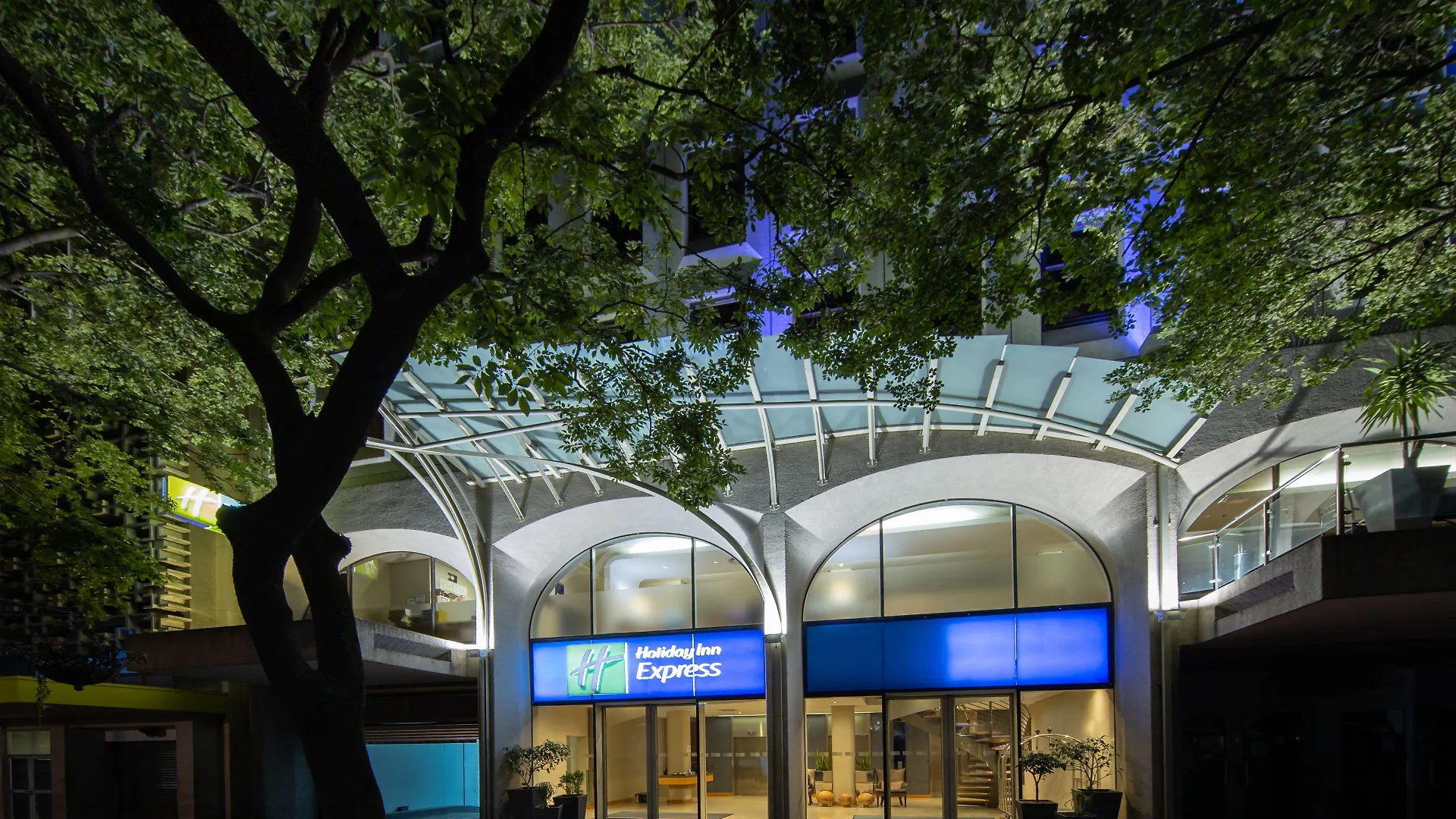
1. Holiday Inn Express Cape Town City Centre By Ihg
Show on map


 Check-infrom 14:00 until 23:59Check-outuntil 11:00
Just a few rooms left at the best rate!
fromR 787
Smart Travel & Timing Advice for Cape Town CBD Stays
Cape Town's CBD sees its highest hotel demand from December through February, when summer weather draws international leisure travelers and domestic tourists simultaneously - rates during this window are at their annual peak. For business travelers, March through May and September through November represent the practical sweet spot: the Cape Town International Jazz Festival in March/April adds demand, but the wider shoulder season delivers better availability, lower pricing, and more temperate weather for city commuting. Midwinter (June-August) is Cape Town's rainy season - the CBD itself remains fully operational, but the wet, windy conditions affect outdoor movement between meetings.
A stay of 3 nights is the functional minimum for a conference or multi-meeting itinerary in the CBD - enough to cover travel days, a full working day, and buffer for schedule changes. Book at least 6 weeks in advance for any stay coinciding with a major CTICC event; last-minute availability in the CBD shrinks rapidly when a large congress is in town, and the few remaining rooms at short notice command a significant premium. If your dates are flexible, targeting Tuesday-Thursday arrivals in the shoulder season gives the best combination of availability and competitive rates.